Showing posts with label Environmental Law. Show all posts

Saturday, October 18, 2025

Hawaiʻi Supreme Court Reaffirms Contested Case Rights and Public Trust Duties in Water Diversion Case

The Hawaiʻi Supreme Court’s decision in Kiaʻi Wai o Waiʻaleʻale v. Board of Land and Natural Resources, No. SCWC-23-0000383 (Haw. Sept. 30, 2025), underscores the continuing importance of due process, traditional and customary rights, and the State’s public trust obligations in the management of Hawaiʻi’s water resources.

Conceptual rendering of Līhuʻe-Kōloa Forest Reserve.

Background 

The case arose from the Board of Land and Natural Resources’ (BLNR) annual renewal of Revocable Permit No. S-7340, which authorized the Kauaʻi Island Utility Cooperative (KIUC) to divert up to 40 million gallons of water per day from the Līhuʻe-Kōloa Forest Reserve—commonly known as the Blue Hole Diversion—for hydroelectric generation. 

Two community organizations, Kiaʻi Wai o Waiʻaleʻale and Friends of Māhāʻulepū, challenged BLNR’s renewal of the permit for calendar years 2021 and 2022. They argued that the continuations were issued without findings or conclusions addressing how the diversion served the best interests of the State, and that BLNR’s refusal to hold a contested case hearing violated their constitutional and statutory rights. 

Although the permit expired on December 31, 2022, the petitioners appealed the denials to the Environmental Court, which ruled in their favor. The Intermediate Court of Appeals (ICA) reversed, finding the case moot and rejecting the claim to a contested case hearing. 

The Hawaiʻi Supreme Court granted certiorari and reversed the ICA. Key Holdings:
  • The Case Was Not Moot. Even though the permit expired, the Court held that two exceptions to mootness applied: (1) The “capable of repetition yet evading review” exception, because revocable water permits are renewed annually and typically expire before judicial review can occur, and (2) The “public interest” exception, because the dispute implicates Hawaiʻi’s public trust in water, an issue of recurring and statewide importance. See Carmichael v. BLNR, 150 Haw. 547 (2022). 
  • Petitioners Had Standing. The Court reaffirmed that Native Hawaiian traditional and customary practices constitute protected property interests under article XII, section 7 of the Hawaiʻi Constitution. Declarations submitted by the petitioners showed that the water diversions impaired cultural practices such as gathering, hunting, and hula. These interests provided sufficient injury in fact and traceability to establish standing. 
  • BLNR Erred in Denying a Contested Case Hearing. Because the petitioners’ traditional and customary rights were at stake, BLNR’s refusal to hold a contested case hearing violated due process under chapter 91, Hawaiʻi Revised Statutes (HRS). The Court cited Flores v. BLNR, 143 Haw. 114 (2018), explaining that where government action may affect substantial, specific property interests, the agency must afford the affected persons an opportunity for a hearing. 
  • BLNR Must Issue Written Findings Under HRS § 171-58(c). The Court emphasized that BLNR has a statutory duty to issue findings of fact and conclusions of law showing how a permit or continuation “best serves the interests of the State.” Because BLNR renewed the permit without those findings, the Environmental Court properly exercised jurisdiction to review the agency’s compliance. 
Implications for Land Use and Resource Management

This decision reinforces a line of cases requiring procedural transparency and substantive accountability when the State manages public trust resources:
  • Revocable permits are not perpetual. Agencies cannot avoid environmental review or contested case procedures by renewing annual permits indefinitely. 
  • Traditional and customary rights have procedural weight. When cultural practices are affected, agencies must provide affected practitioners with notice and a meaningful opportunity to be heard.
  • Public trust duties remain central. The State must affirmatively demonstrate—through findings, not assumptions—how its decisions protect and promote the long-term interests of the people of Hawaiʻi. 
For practitioners, the decision signals that contested case rights may attach to a wide range of discretionary land and water authorizations, particularly where traditional and customary rights or environmental interests are implicated. 

Broader Context 

The opinion arrives as Hawaiʻi continues to grapple with aging water-diversion infrastructure, competing demands between energy production and ecosystem restoration, and ongoing litigation over water use permits across the islands. 

The Court’s reasoning aligns with its decisions in In re Water Use Permit Applications (Waiāhole Ditch), 94 Haw. 97 (2000), and Carmichael, confirming that public-trust obligations apply across all forms of state land and water dispositions—including temporary, revocable ones. 

Takeaways  

Kiaʻi Wai o Waiʻaleʻale serves as another reminder that in Hawaiʻi, water is a public trust resource. When state agencies exercise discretion to authorize its use, they must do so transparently, with full regard for the rights of Native Hawaiian practitioners and the interests of future generations.

Hawaiʻi Supreme Court Clarifies Appellate Deadlines and Keeps Cultural-Compliance Dispute Alive

In Mālama Kakanilua v. Director of the Department of Public Works, County of Maui, SCWC-19-0000107 (Sept. 30, 2025), the Hawaiʻi Supreme Court issued a decision that matters to both lawyers navigating post-judgment procedures and project proponents working on lands with historic and cultural resources. 

Image of heavy construction equipment moving dirt.

Appellate Procedure: Rule 60(b)(6) Motions Toll the Appeal Deadline 

The Court held that a motion for relief under Hawaiʻi Rules of Civil Procedure Rule 60(b)(6)—the catch-all provision for “any other reason justifying relief from judgment”—tolls the time to file an appeal under Hawaiʻi Rules of Appellate Procedure Rule 4(a)(3).  

Previously, the Intermediate Court of Appeals had dismissed Mālama Kakanilua’s appeal as untimely, reasoning that a Rule 60(b)(6) motion did not extend the deadline. 

The Supreme Court disagreed. It explained that so long as the motion is filed within 30 days after entry of judgment, the time to appeal is suspended until the trial court resolves that motion.  

For lawyers, this clarification provides a safety net. A timely filed Rule 60(b)(6) motion preserves appellate rights, ensuring parties can seek reconsideration of a judgment without forfeiting their opportunity for review. 

Substantive Context: Grading Permit Renewal and Cultural Resource Protections 

The underlying dispute arose from Maui Lani Partners’ grading permit for a residential subdivision in Wailuku. Petitioners argued that the County’s Department of Public Works unlawfully renewed the grading permit without consulting the State Historic Preservation Division (SHPD), as required under HRS § 6E-42 and corresponding provisions of the Maui County Code. 
They also claimed the County failed to make findings of “good cause” for the permit’s extension. 

The circuit court dismissed the claims, and the ICA affirmed—on procedural grounds. By reversing that dismissal, the Supreme Court revived the appeal and sent the case back to the ICA to decide the merits of the cultural-preservation claims. 

Practical Implications for Project Proponents and Agencies 

While the Court did not reach the underlying environmental and cultural-resource issues, the decision signals that permit renewals and extensions will continue to face close judicial scrutiny when historic-preservation procedures are in question. Project proponents should: 
  • Document SHPD consultation under HRS Chapter 6E even when seeking permit extensions rather than new permits. 
  • Ensure “good cause” findings are explicit in county records when permits are renewed.  
  • Anticipate litigation risks if cultural consultation steps are overlooked, particularly in areas known to contain burials or archaeological sites. 
For government agencies, the decision underscores the importance of clear administrative records and transparent decision-making that demonstrate compliance with both state and local cultural-resource laws. 

Key Takeaway 

The Court’s holding restores an appeal that might otherwise have been lost to a technical deadline—and keeps alive a broader debate about how Hawaiʻi’s permitting systems protect cultural heritage. 

For practitioners, Mālama Kakanilua is a reminder that procedural precision and substantive diligence go hand in hand: the first preserves your client’s right to be heard, and the second ensures that development decisions respect Hawaiʻi’s historical and cultural foundations.

Saturday, September 13, 2025

Hawaiʻi Supreme Court Reaffirms Limits on Collateral Land Use Challenges, but Preserves Path for Environmental Review Claims

On September 12, 2025, the Hawaiʻi Supreme Court issued its decision in Maui Lani Neighbors, Inc. v. State of Hawaiʻi (SCWC-16-0000444), addressing how neighbors may challenge zoning and environmental approvals for major projects. 


The case arose from a dispute over the Central Maui Regional Sports Complex, a 65-acre facility approved by the Maui Planning Commission in 2014 through a county special use permit (CUP). 

Background 

Residents opposed to the sports complex formed Maui Lani Neighbors, Inc. (MLN) after the Planning Commission approved the CUP. Instead of intervening in the CUP process or filing a timely appeal under HRS § 91-14, MLN filed suit in circuit court, raising zoning, constitutional, and environmental claims. 

Both the circuit court and the Intermediate Court of Appeals dismissed most of the claims, concluding that MLN had failed to exhaust available administrative remedies. 

Supreme Court’s Holding 

The Court largely agreed, but clarified important distinctions: 

  • Zoning and Due Process Claims: Because MLN members received notice and attended the CUP hearing, they were required to intervene or appeal under HRS § 91-14. The Court reaffirmed that zoning challenges must be pursued through the administrative process, not through collateral lawsuits. 
  • Declaratory Judgment Actions: The Court reaffirmed that HRS § 632-1 does not provide an alternative route when HRS § 91-14 offers a special statutory remedy. 
  • Constitutional Environmental Claims (Art. XI, § 9): MLN argued that Hawaiʻi’s constitutional right to a “clean and healthful environment” provided direct access to court. The Court held that, to the extent such claims were based on zoning statutes (HRS chs. 46 and 205), they were still subject to the HRS § 632-1 limitation. But claims premised on HRS ch. 343 (HEPA) could proceed, because the legislature expressly gave courts jurisdiction under HRS § 343-7. 
  • HEPA Claims: The Court held that the Planning Commission lacked authority to decide whether DLNR’s environmental review was sufficient. Circuit courts have original jurisdiction over HEPA challenges, and dismissal of those claims was error. 

Key Takeaways

  1. Timely Appeals Are Critical: When a permit is issued after a public hearing, opponents must intervene or appeal under HRS § 91-14. Collateral lawsuits are barred. 
  2. Declaratory Relief Is Not a Shortcut: HRS § 632-1 cannot be used to sidestep the administrative appeal process. 
  3. Environmental Review Is Different: HEPA challenges remain viable in circuit court, even when project permits are otherwise shielded by the exhaustion doctrine. 
  4. Article XI, Section 9 Enforcement: Hawaiʻi’s constitutional environmental right continues to provide an independent basis for judicial review, but its scope depends on the underlying statute.  
This decision reaffirms that permits issued after contested case hearings are secure against collateral zoning challenges, provided proper procedures are followed. It underscores the importance of timely participation in administrative hearings, while preserving a pathway for judicial review of environmental assessments under HEPA.

Thursday, May 29, 2025

SCOTUS Refocuses NEPA Review in Seven County Infrastructure Coalition v. Eagle County, Colorado

On May 29, 2025, in Seven County Infrastructure Coalition v. Eagle County, Colorado, the U.S. Supreme Court reversed the D.C. Circuit’s invalidation of the Surface Transportation Board’s approval of an 88-mile railway connecting Utah’s Uinta Basin to the national freight network. The ruling carries major implications for how federal agencies and project proponents approach environmental review under the National Environmental Policy Act (NEPA).

Map showing the Surface Transportation Board's environmentally preferred alternative based on its Final EIS. https://icfbiometrics.blob.core.windows.net/uinta-basin/02_Proposed_Action_FEIS.pdf

The Court’s decision reinforces a more deferential posture toward agency discretion in NEPA cases, emphasizing the procedural (rather than substantive) character of the statute and narrowing the required scope of environmental review to focus on the “proposed action” itself. This shift is particularly relevant to project proponents who face litigation challenging the sufficiency of an environmental impact statement (EIS) based on indirect or speculative environmental effects.

The Issue Before the Court

The Surface Transportation Board prepared a comprehensive EIS analyzing the construction and operation of the Uinta Basin Railway. While the EIS addressed numerous impacts—including effects on wetlands, wildlife, land use, air quality, and recreation—it noted, but did not fully analyze, the potential environmental consequences of upstream oil drilling and downstream refining that could result from expanded oil transport enabled by the railway.

The D.C. Circuit vacated the Board’s approval, concluding that it had failed to take the required “hard look” under NEPA at these foreseeable, indirect impacts. Specifically, it faulted the Board for not conducting a more extensive evaluation of increased oil drilling in the Uinta Basin and refining activities in Gulf Coast states. See Eagle Cty. v. Surface Transp. Bd., 82 F.4th 1152 (D.C. Cir. 2023).

Majority Opinion: Project-Based Review and Substantial Deference

Writing for the Court, Justice Kavanaugh reversed (joined by Chief Justice Roberts and Justices Thomas, Alito, and Barrett). He held that the D.C. Circuit misapplied NEPA by failing to defer to the Board’s reasonable judgment about the scope and detail of the EIS. The Court underscored three key principles:

  1. NEPA is procedural, not substantive. It requires agencies to prepare a detailed statement addressing significant environmental effects and feasible alternatives, but does not dictate the outcome. NEPA “does not mandate particular results, but simply prescribes the necessary process.” Slip op. at 6.

  2. Agency discretion in defining the scope of the EIS is entitled to substantial deference. Courts should not “micromanage” agencies’ decisions about the breadth of their NEPA analyses. “The only role for a court is to confirm that the agency has addressed environmental consequences and feasible alternatives as to the relevant project.” Id. at 9 (internal quotes omitted).

  3. The focus must remain on the “proposed action.” Environmental effects from projects that are “separate in time or place” and beyond the agency’s regulatory control fall outside the required scope of NEPA review. “[T]he fact that the project might foreseeably lead to the construction or increased use of a separate project does not mean the agency must consider that separate project’s environmental effects.” Id. at 3 (emphasis in original).

The majority explicitly rejected a “but-for” causation standard: “[A] mere ‘but for’ causal relationship is insufficient to make an agency responsible for a particular effect.” Id. at 18 (internal citations omitted).

Concurring Opinion: A More Statutory Approach to NEPA Limits

Justice Sotomayor, joined by Justices Kagan and Jackson, concurred in the judgment but emphasized a different rationale. Rather than focusing on agency discretion or the risk of judicial overreach, the concurrence concluded that NEPA did not require review of oil drilling and refining impacts, because the Board lacked the legal authority to reject the railway project based on those consequences.

Under Public Citizen, NEPA does not require analysis of environmental effects if the agency has no power to prevent or mitigate them. The Board, as a federal railroad regulator, could not lawfully deny the project to prevent oil-related emissions. Thus, it bore no responsibility under NEPA for analyzing them. See Slip op. (Sotomayor, J., concurring) at 11.

The concurrence also cautioned against policy-driven analysis: 

I agree with the Court that the Surface Transportation Board would not be responsible for the harms caused by the oil industry, even though the railway it approved would deliver oil to refineries and spur drilling in the Uinta Basin. I reach that conclusion because, under its organic statute, the Board had no authority to reject petitioners’ application on account of the harms third parties would cause with products transported on the proposed railway. The majority takes a different path, unnecessarily grounding its analysis largely in matters of policy.

Id. at 1.

Key Takeaways

Points to consider for those navigating the environmental review process:

  • Clarify the “proposed action” early. The Court’s emphasis on NEPA’s textually mandated focus on the “project at hand” makes it critical to define the scope of action in a defensible way.

  • Document jurisdictional boundaries. Agencies should explain in the record when potential impacts fall outside their authority to regulate or control.

  • Don’t overextend the EIS. The Court explicitly discouraged including distant or speculative impacts to avoid “delay upon delay.” Slip op. at 13.

  • Build a reasonable record—not an exhaustive one. “Even a deficient EIS does not necessarily require vacating an agency’s project approval, absent reason to believe that the agency might disapprove the project if it added more to the EIS.” Id. at 2–3.

A Shift in Judicial Posture on NEPA

This ruling reflects a broader reorientation in the Court’s administrative law doctrine. The majority criticizes “overly intrusive (and unpredictable) review in NEPA cases” and seeks to bring judicial oversight “back in line with the statutory text and common sense.” Id. at 12.

"When a party argues that an agency action was arbitrary and capricious due to a deficiency in an EIS, the reviewing court must account for the fact that NEPA is a purely procedural statute." Id. at 9. The NEPA "Hard Look" review is still valid. The Court’s deference under NEPA is procedural and factual—related to how thoroughly an agency considered environmental effects—not to how it interprets legal provisions.

For developers, public agencies, and infrastructure advocates, this means courts may now be less receptive to claims that agencies failed to evaluate cumulative or indirect effects that are tenuously related to the federal action under review.

Still, the concurring opinion reminds us that NEPA's reach remains contingent on the specific statutory authority of the reviewing agency. This keeps the door open to more expansive NEPA analysis where an agency possesses broader regulatory discretion under its authorizing statute.

As always, rigorous administrative records, clearly defined project boundaries, and well-supported explanations will remain key to defensible agency decisions.

For additional legal updates and analysis on environmental review, permitting, and infrastructure projects in Hawaiʻi and beyond, visit HawaiiLandUseLaw.com.

Wednesday, January 1, 2025

Hawaiʻi Supreme Court Provides Useful Insight for EIS Preparers in Upholding Aquarium Fishing Permits

On August 28, 2024, the Hawaiʻi Supreme Court issued its opinion in Kaupiko v. Board of Land and Natural Resources, marking another chapter in the ongoing legal battles over commercial aquarium fish collection from state coastal waters.

Background

In 2017, the Court held in Umberger v. Dep’t of Land & Nat. Res., 140 Hawaiʻi 500 (2017) that commercial aquarium collection permitting is not exempt from review under Hawaiʻi Revised Statutes (HRS) Chapter 343, the Hawaiʻi Environmental Policy Act (HEPA). The Court ruled that such permits are not merely “minor alterations” to state waters, stating:

“A permit for extraction of an unlimited number of aquatic life cannot be said to constitute only a ‘minor alteration’ in the condition of state waters and submerged lands.”

Following the Umberger decision, the Pet Industry Joint Advisory Council (PIJAC) prepared an Environmental Impact Statement (EIS) to obtain permits for commercial aquarium fishing in the West Hawaiʻi Reef Fishery Management Area (WHRFMA). The Board of Land and Natural Resources (BLNR) rejected the EIS for fourteen specific deficiencies. PIJAC revised the EIS, published it, and resubmitted it to BLNR for acceptance. However, a BLNR vote to consider the EIS ended in a 3-3 tie. Under HRS § 343-5(e), such a tie results in the EIS being “deemed accepted.” HRS § 343-5(e) provides,

“The final statement shall be deemed to be accepted if the agency fails to accept or not accept the final statement within thirty days after receipt of the final statement.”

While the case was pending, BLNR authorized limited commercial aquarium collection permits on August 23, 2024.

Supreme Court Decision

The Court addressed three substantive issues on appeal, holding:

  1. The State was a proper defendant in the case and was required to defend the EIS.
  2. A reviewing court must apply the “rule of reason” alongside HEPA’s content requirements when evaluating an EIS.
  3. The EIS met HEPA’s content requirements and contained sufficient information for BLNR to make an informed decision.

Key Holdings


1. The State as Proper Defendant

The State argued that it should not be required to defend the EIS because the EIS was accepted by operation of law due to the tie vote, not through an affirmative agency decision. The Court rejected this argument, reasoning that acceptance under HRS § 343-5(e) is still an agency action and subject to judicial review. The Court clarified that the State, through BLNR, remained responsible for the adequacy of the EIS, even in cases of deemed acceptance.

2. The Rule of Reason in EIS Review

The Court reaffirmed its holding in Price v. Obayashi Hawaiʻi Corp., 81 Hawaiʻi 171 (1996), emphasizing that the sufficiency of an EIS is guided by the rule of reason. Under this standard:

"An EIS need not be exhaustive to the point of discussing all possible details bearing on the proposed action but will be upheld as adequate if it has been compiled in good faith and sets forth sufficient information to enable the decision-maker to consider fully the environmental factors involved."

The Court outlined steps for reviewing an EIS:

  • HEPA Content Review. Evaluate whether the EIS satisfies the environmental factors in HAR § 11-200.1-24, ensuring it provides sufficient information for reasoned decision-making.
  • Response to Deficiencies. Ensure that the final EIS addresses initial reasons for rejection and responds to substantive feedback, as required under HAR § 11-200.1-27.
  • Practical Inquiry. Consider whether alleged HEPA violations impede informed decision-making or public comment.

3. Use of Appendices in EIS Documentation

Opponents argued that HEPA requires substantive comments to be incorporated directly into the body of the EIS. The Court disagreed, holding that appendices may contain important information, provided the EIS’s body guides readers to relevant appendices. The Court stated:

“The purpose of the EIS here was to ensure that BLNR made a fully informed decision as to the environmental impact of commercial aquarium permits in the WHRFMA. That purpose is not defeated when important information is held in an appendix.”

The Court concluded that the EIS met HEPA’s requirements because the body and appendices together enabled BLNR to make a reasoned decision.

Lessons from Kaupiko

The Kaupiko decision underscores the importance of an EIS that balances legal sufficiency with practical usability. Key takeaways for preparing an enforceable EIS include:

  • Address All Concerns. Ensure that all substantive feedback and prior deficiencies are addressed thoroughly.
  • Structure with Clarity. Use appendices effectively, while ensuring the body of the EIS directs readers to relevant content.
  • Focus on Decision-Making. The overarching goal is to enable informed and reasoned decision-making based on the environmental factors at issue.

This decision reaffirms HEPA’s role in safeguarding environmental and public interests while balancing procedural fairness for applicants.


Thursday, June 13, 2019

Hawaii's New EIS Rules become Effective in August 2019, Here's What You Need to Know

The Office of Environmental Quality Control ("OEQC") and State Environmental Council ("Council") submitted the final proposed rules to the Governor’s Office in April 2019.  Governor Ige announced that he plans to sign the rules on July 30, 2019, and the rules will take effect on August 9, 2019.

The new rules will repeal the existing Hawai‘i Administrative Rules (HAR) Chapter 11-200, and adopt a new chapter, HAR Chapter 11-200.1.  OEQC provides a Rationale for Final Proposed HAR Chapter 11-200.1.

Here are some things to consider when the new rules take effect:
  • These rules do not amend or change the requirements of HRS chapter 343.
  • The following terms have not changed:
    • EA: environmental assessment
    • EIS: environmental impact statement
    • EISPN: environmental impact statement preparation notice
    • FONSI: finding of no significant impact
    • NEPA: National Environmental Policy Act
  • Save the trees.  
    • Materials must be submitted electronically to the OEQC for publication in The Environmental Notice
    • Agencies must provide Exemption Notices electronically
    • No longer required to mail individual responses to commenters—it will be posted online as part of the HEPA document
    • Some EA and EIS documents must be made available in paper, for example:
      • EA to the library in the area most affected by the action
      • Draft and final EA filed with the State Library’s Hawaii Documents Center
  • Clearer guidance for programmatic documents.  
    • A programmatic (as distinguished from a project-based) environmental review should be "enough to make an informed choice among program-level alternatives and broad mitigation strategies"
  • Supplemental documents.  
    • To determine whether an agency is eligible to prepare a supplemental EIS, apply the following criteria:
      • Whether the proposed action was a component of, or is substantially similar to, an action that received an exemption, FONSI, or an accepted EIS;
      • Whether the proposed action is anticipated to have direct, indirect, and cumulative effects similar to those analyzed in a prior exemption, final EA, or accepted EIS; and
      • In the case of a final EA or an accepted EIS, whether the proposed action was analyzed within the range of alternatives.
      • If the answer is “yes” or “no”, the agency may publish the determination with the OEQC for publication in the periodic bulletin.
  • New exemptions process.
    • Agencies would have seven years to reorganize and update their exemption lists to comply with the rules
  • Climate change added to significance criteria.
    • Adaptation.  Agencies must consider whether a proposed action is likely to have a substantial adverse effect on or is likely to suffer damage by being located in a sensitive area such as the sea level rise exposure area; SLR maps should be included in EAs and EISs to demonstrate the potential vulnerability
    • Greenhouse gas reduction.  Agencies must consider whether a proposed project will emit substantial greenhouse gases at any stage or may emit substantial greenhouse gases as an indirect or cumulative impact.
  • No EISPN required, but...
    • May skip an EISPN and prepare an EIS when there is clear potential for a significant impact
    • BUT, a public scoping meeting is required as well as incorporation of public feedback from the scoping meeting into the draft EIS
  • Public comment periods may be extended with notice.
    • Thirty days for draft EA and EISPN documents
    • Forty-five days for draft EIS documents
    • Comments received between publication periods do not have legal standing because they are not submitted during a legal window
  • Public comments—less paper.
    • A written response to be physically mailed to each commenter is no longer required.
    • Agencies and applicants may respond to comments based on the “grouping” model allowed under NEPA
    • List commenters whose comments are being addressed under each topic heading or section
    • All comment letters containing substantive comments must be appended to the final EIS or EA
    • Form letters may be responded to in a single response appended to the HEPA document if not using the grouping approach
    • Form letters that have additional substantive points be appended in full to the document, and receive a response
  • EIS scoping meeting are required on each island affected by a proposed action, but...
    • No need to transcribe and respond
    • Oral comments may be recorded and a summary provided in the draft EIS
  • NEPA-HEPA joint documents.
    • A single document and single comment period that satisfies both federal and state requirements can be used to satisfy both NEPA and HEPA
    • The agency must make an independent determination, pursuant to chapter 343, HRS, of the necessary level of environmental review
  • Do the new rules apply to my proposed action?
    • For EAs, if the draft EA was published by the office prior to the adoption of this chapter and has not received a determination within a period of five years from the implementation of this chapter, then the proposing agency or applicant must comply with the requirements of this chapter
    • For EISs, if the EISPN was published by the office prior to the adoption of this chapter and the final EIS has not been accepted within five years from the implementation of this chapter, then the proposing agency or applicant must comply with the requirements of this chapter
    • Exemption lists that have received concurrence under chapter 11-200 may be used for a period of seven years after the adoption of this chapter

Sunday, September 11, 2016

Hawaii Appeals Court Sets Boundary on the Applicability of State EIS Law

The trend in Hawaii's appellate courts has been to expand the scope and applicability of Hawaii's environmental laws.  The courts have rarely deferred to agency expertise and discretion.

In Umberger v. Department of Land and Natural Resources ("DLNR"), the Hawaii Intermediate Court of Appeals defined the outer-limits of Hawaii's environmental impact statement law, commonly referred to as the Hawaii Environmental Policy Act ("HEPA").

Yellow Tangs, A Commonly Harvested Aquarium Fish
The case involved aquarium fish permits that allow permittees to collect fish for aquarium purposes from Hawaii's waters.  The Court defined the question before it as follows:
[W]hether a particular Hawaii statute, HEPA, is intended to apply so that each applicant for an aquarium fish permit must, at a minimum, prepare an EA [environmental assessment]—as well as engage in the related process of consultation, information gathering, and public review and comment—and DLNR must, with each application, undertake a HEPA review prior to issuing an aquarium fish permit.
The Court disagreed, and held as follows:
We conclude that to interpret "program or project" so sweepingly as to require individual aquarium fish permit applicants to undertake the EA process is not a "rational, sensible and practicable interpretation" of HEPA and would create an unreasonable, impractical, and absurd result. Accordingly, we hold that aquarium collection under an aquarium fish permit issued by DLNR pursuant to HRS § 188-31 is not an "applicant action" under HEPA.
Citations omitted.

Although not essential to its decision, the Court provided a rare statement of agency deference when it stated that, "There is no question that the DLNR shares Appellants' concerns about the health of Hawaii's reefs and its marine inhabitants and seeks to appropriately manage and administer the aquatic life and aquatic resources of the State in accordance with all applicable laws."  The U.S. Supreme Court recognized that judicial deference to agency expertise is one of the most important principals in administrative law, due in part to an agency's intense familiarity with the history and purposes of the legislation at issue and their practical knowledge of what will best effectuate those purposes.

Read the entire opinion at https://scholar.google.com/scholar_case?case=9667698222799409226.

Friday, July 10, 2015

9th Circuit Court: Conservation Efforts Outweigh Economic Impacts

The appeal in Building Industry Association v. U.S. Department of Commerce arose under the Endangered Species Act (“ESA”) and the Administrative Procedure Act (“APA”).  It required the 9th Circuit Court of Appeals to review the designation of critical habitat for a threatened species–the southern distinct population segment of green sturgeon (the “Southern DPS of green sturgeon”)–and the regulations implementing that designation.

Green Sturgeon
The context for this litigation is the impact of the designation on local property owners and on the residential construction industry in the Sacramento-San Joaquin Delta and within the Sacramento River basin of Northern California. 

In 2001, the Center for Biological Diversity (“CBD”), along with two other organizations, petitioned National Marine Fisheries Service (“NMFS”) (NMFS is a service under NOAA in the Department of Commerce) to list the green sturgeon as “threatened” or “endangered” under the ESA, and to designate critical habitat.  In 2005, NMFS published a proposed rule listing the Southern DPS as “threatened.”  In 2010, NMFS designated approximately 11,421 square miles of marine habitat, 897 square miles of estuary habitat, and hundreds of additional miles of riverine habitat in Washington, Oregon and California as critical habitat.

Under the ESA, as soon as a species has been listed as either threatened or endangered, agencies are required to consider designating critical habitat. Critical habitat is defined as “the specific areas within the geographical area occupied by the species . . . on which are found those physical or biological features (I) essential to the conservation of the species and (II) which may require special management considerations or protection.” Before designating any particular area as critical habitat, an agency must “tak[e] into consideration the economic impact, the impact on national security, and any other relevant impact,” of the designation. The agency “may exclude any area from critical habitat if [it] determines that the benefits of such exclusion outweigh the benefits of specifying such area as part of the critical habitat” unless exclusion will result in the extinction of the species. (Citations omitted.) 

Appellants’ arguments considered by the Court included the following:
  • When designating critical habitat for the Southern DPS of green sturgeon, NMFS failed to balance the conservation benefits of designation against the economic benefits of exclusion from designation. 
  • NMFS’s decision not to exclude certain areas from critical habitat designation is subject to judicial review and NMFS abused its discretion in not excluding those areas.
  • As part of the designation process, NMFS was required to comply with the National Environmental Policy Act (“NEPA”).
The Court held in favor of  NMFS as follows:
  • When considering the economic impact of its designation, NMFS complied with section 4(b)(2) of the ESA and was not required to follow the specific balancing-of-the-benefits methodology argued for by Appellants.
  • Section 4(b)(2) of the ESA establishes a discretionary process by which the agency may exclude areas from designation, but does not set standards for when areas must be excluded from designation.  An agency’s discretionary decision not to exclude an area from designation is not subject to judicial review.
  • Appellants’ NEPA claim fails because NEPA does not apply to critical habitat designations. The court cited, inter alia, Douglas Cnty. v. Babbitt, 48 F.3d 1495, 1501–08 (9th Cir. 1995) (explaining that critical habitat designations are not subject to NEPA because: (1) the ESA displaced the procedural requirements of NEPA with respect to critical habitat designation; (2) NEPA does not apply to actions that do not alter the physical environment; and (3) critical habitat designation serves the purposes of NEPA by protecting the environment from harm due to human impacts).
This opinion should give landowners heartburn and Congress a lot to think about regarding potential ESA amendments.  The next step for the Appellants in this case is to request review by the U.S. Supreme Court.
 

Wednesday, June 4, 2014

Appeals Court Affirms Sufficiency of Environmental Impact Statement Related to Landfill Expansion

Waimanalo Gulch Sanitary Landfill
In short, the City and County of Honolulu decided to expand the size and operation of the Waimanalo Gulch Sanitary Landfill.  Not all in the community supported this effort.  Administrative and judicial challenges to stop the project occurred on several fronts.  This blog entry deals with challenges to the final environmental impact statement (EIS) that was prepared for the project.

In Hanabusa v. Department of Environmental Services of the City and County of Honolulu, ICA No. 30517, May 30, 2014, Plaintiff challenged the project's Final EIS on the following grounds:

  1. The Final EIS concealed and failed to adequately address the true nature of the project (primarily as it relates to size); and
  2. The Circuit Court erred in failing to address each of the allegations in Plaintiff's complaint regarding the insufficiency of the Final EIS.
The Intermediate Court of Appeals (ICA) disagreed with Plaintiff and affirmed the Circuit Court's judgment in favor of the City.

Notable takeaways from the decision are:
  • The argument by Plaintiff that the City promised to close the site by 2008, but instead proposed expanding and continuing use "until capacity . . . is reached" did not have any weight on the ICA's review of the adequacy of the EIS.  
  • In practice, there has always been some grey area about the extent to which the Hawaii Environmental Policy Act (HEPA) can tier off of previous environmental documents (like EIS preparers often do for similar NEPA documents).  In this case, the ICA looked favorably on the fact that the EIS referred to previous EIS documents and studies related to the site.
  • Plaintiff was barred from raising an EIS challenge to the scope of the Final EIS, because Plaintiff did not raise that issue in Plaintiff's EIS comments.
  • When a plaintiff alleges that an EIS does not take a "hard look" at environmental factors, the burden is on the plaintiff to (1) provide significant details or arguments with respect to those claims, or (2) cite persuasive legal authority.
Additional background on this matter can be found in the article entitled, Hawaii Supreme Court Remands Landfill Decision to State Land Use Commission based on Unsubstantiated Closure Date Requirement.

Thursday, October 17, 2013

Top 10 Tips for Getting Through the Land Use Regulatory Process

  • Local knowledge - Nothing grabs a community's attention like a construction project in or around their neighborhood.  Be it public utility, roads, schools, houses, or commercial project, people want to know what you're doing, why you're doing it, and how it will affect them.  Reaching out to the community early, often, and in a way that values their input is not only being a good neighbor, but often a regulatory prerequisite. Outreach needs to be strategic.  It's not enough to have large public meetings.  Gathering public input also means meeting with the right people, such as community leaders (not necessarily elected) who represent broader communities.  Having a good public outreach plan that is prepared in consultation with folks who know the community, coordinated with project planning, can help focus efforts and avoid regulatory duplication.
  • Identify key regulatory personnel - So you stopped by X agency and you talked to someone, and you walked away feeling pretty good because that person said that your project should get through the regulatory process without any problems.  Don't start counting your chickens until you ask yourself these questions: (1) Are you pursuing the correct regulatory approval, (2) Are you at the correct agency, and (3) Does the person you spoke to have authority to speak for the agency?  Your answers should be: yes, yes, and yes.
  • Complete the application - Applicants file incomplete applications all the time.  In the best of circumstances, the applicant failed to get professional help and doesn't understand the process.  In the worst case, the applicant expects the regulator to do the applicant's work by reviewing the incomplete application and telling the applicant how to complete it.  In the former case, agencies generally have guidance available than can help the public navigate the permitting process.  However, in the latter case, it's just unprofessional.  It's a sure way to upset a regulator--and you don't want that.  Most regulators want to help you get through their process quickly and efficiently.  They don't want a backlog.  If you have a critique about a certain requirement, a regulator can't change that.  You'll need to take it up with the legislative body that makes law.  Also, there is a difference between turning in an incomplete application and pre-consultation.  Pre-consultation, before submitting an application and after the applicant has done some research, is encouraged.
  • Don’t skimp on planning and outreach - Old Ben Franklin's adage should be taken to heart: An ounce of prevention is worth a pound of cure.  Early planning, which includes a permitting, entitlement, environmental review, and outreach strategy at the front end of a project significantly reduces financial and legal risk during final design and construction.  A frustrated developer once told me, "It doesn't matter what we do, we'll be sued anyway."  Well yes, that may be true, but thoughtful planning can reduce the amount of time you spend in court and reduce the likelihood of a court telling you that the project needs to start over. 

  • Know the game: discretionary or ministerial - Knowing this will inform how you develop your project development strategy.  Ministerial or over-the-counter permits are those that have very specific code requirements that must be fulfilled before it is approved, like a building permit.  A discretionary approval allows the regulator more discretion for tailoring an approval with various requirements of approval based on broader criteria, like a change of zoning request. This usually involves a board, commission, or elected body
  • Define your project—stick to it - Granted, as you work through planning, permitting, and environmental review, elements of the project may change; however, you should go into the process with a clear understanding of the proposal's purpose and need.  This should be clear and concise, because changing the purpose and need midstream while working through the panoply of land use approvals can have unintended consequences. If the project is changed too much, you may need to start over.
  • Follow approval criteria - You do not need to win a regulator over on how great your project is. All the regulator needs to know is how your proposal satisfies the regulatory criteria and process required by the particular permit or entitlement you are applying for. Write clearly and concisely.  Show exactly how the facts of your proposal match up with regulatory requirements. Enable the regulator to expeditiously process your application. 
  • Look for opportunities for concurrency - The permitting, planning, and environmental review processes allow many opportunities for cross-referencing reports, facts, figures, and public hearings. For example, environmental review documents can be used to concurrently address permitting requirements; and county, state, and/or federal requirements often share similar requirements and criteria.
  • Have the right team of experts - Depending on the complexity of your proposal and whether it's a ministerial or discretionary approval, you will need several experts, for example, architects, engineers, planners, lawyers, and financial experts.  Although many of these fields are cross-trained to some extent, it's rarely a good idea to substitute one for the other.  You can't build a house with only a hammer--you need the whole toolbox.


  • Be sure your team is communicating - It is not uncommon for well-intended team members to not adequately communicate with the rest of the development team.  The attorney can't reduce legal risk if he doesn't know what the planners are recommending for their environmental impact statement strategy.  The planners can't properly address potential alternatives if the engineers have one approach in mind for design that no one knows about.  Someone needs to be able to organize the team so the proper disciplines are working on the right issues, and communication across disciplines is happening to ensure that all decisions are fully informed and aimed at achieving the project purpose and need.
I originally presented this list at a workshop on green industry permitting.  Materials for the workshop will be posted at http://planning.hawaii.gov/navigating-the-permit-process-tips-tools-for-green-industry/.


Thursday, August 8, 2013

Haw. State Bar Association Presents Federal and State Land Use and Planning Law Update


William S. Richardson School of Law, Professor David Callies, and Director of State Office of Planning, Jesse Souki, will cover recent federal and state case law and legislation affecting land use and planning in Hawaii. Topics will include the recent takings opinion from the US Supreme Court (Koontz v. St. Johns River Water Management District) and state appellate court decisions related to takings, public trust doctrine, and historic preservation.

Date: Thursday, August 29, 2013
Location: HSBA Conference Room
Credits: 1.5 MCPE

Additional Information:


Thursday, November 1, 2012

Federal Court Issues Significant Ruling in Honolulu Rail Project Case

Federal District Court Judge Wallace Teshima issued a significant order today stemming from a challenge to the City's environmental review of its proposed rail transit project.

In his Decision, Teshima concluded as follows: (1) the City failed to complete reasonable efforts to identify above-ground Traditional Cultural Properties (TCP) prior to issuance of the Federal Transit Administrations' record of decision, pursuant to a federal transportation law related to historic resources; (2) the City failed to adequately consider the Beretania Street Tunnel alternative prior to eliminating it as imprudent from EIS analysis; and (3) the City failed to adequately consider whether the project will "constructively use" Mother Waldron Park, pursuant to a federal transportation law that requires analysis of indirect impacts to park resources.

However, Teshima sided with the City on several issues, including that managed lanes, bus rapid transit, and at grade alternatives were properly excluded from EIS analysis.

The next step is for the court to consider whether to issue a permanent injunction at this time and its terms.  The parties were directed by Teshima to brief this issue.

This case focused on federal environmental laws.  In a separate state court decision, the project's EIS was upheld.  A copy of the Teshima's decision can be found at http://t.co/1ZJKnDZR.

Tuesday, September 18, 2012

Act 55 (2011), Hawaii's Public Land Development Corporation (PLDC)

Source: Wikipedia
With all the sturm und drang surrounding the creation of the PLDC by the legislature (Act 55 (2011)), it is easy to lose sight of what Act 55 actually says.  For better or worse, here is a Reader's Digest version of Act 55.  Unless otherwise indicated, quotations indicate language quoted from Act 55.

The PLDC is the newly created "development arm of the department of land and natural resources (DLNR)."  According to DLNR's Web site, its mission statement is as follows:  "Enhance, protect, conserve and manage Hawaii’s unique and limited natural, cultural and historic resources held in public trust for current and future generations of visitors and the people of Hawaii nei in partnership with others from the public and private sectors."  A portion of the monies earned from PLDC activities are deposited into the Hawaii public land development revolving fund, which ostensibly helps DLNR achieve its mission.

The PLDC is authorized to "identify the public lands that are suitable for development . . carry on marketing analysis to determine the best revenue-generating programs for the public lands identified, enter into public-private agreements to appropriately develop the public lands identified, and provide the leadership for the development, financing, improvement, or enhancement of the selected development opportunities."  In particular, Act 55 enumerates the following non-exhaustive list of "[p]ermissible uses . . . office space; vehicular parking; commercial uses; hotel, residential, and timeshare uses; fueling facilities; storage and repair facilities; and seawater air conditioning plants."

There are five board of directors: chairperson of the board of land and natural resources; director of finance; director of business, economic development, and tourism; and one member each appointed by the speaker of the house of representatives and the president of the senate.  The board appoints an executive director who may appoint officers, agents, and employees.

Various powers to develop public land are granted to the PLDC, such as the ability to make and execute contracts and sue and be sued.  The PLDC has several financing mechanisms at its disposal, including the power to issue revenue bonds (with the approval of the governor).  It can "[o]wn, hold, improve, and rehabilitate any real, personal, or mixed property acquired; and sell, assign, exchange, transfer, convey, lease, or otherwise dispose of, or encumber the same[.]"  PLDC can partner with "qualified persons or other governmental agencies[.]"

The PLDC must "prepare the Hawaii public land optimization plan, which shall define and establish goals, objectives, policies, and priority guidelines for its public land optimization development strategy."  Act 55 provides that the plan must include the following five elements: inventory of public lands, protection of culturally-sensitive areas, feasible strategies for the promotion and marketing of any projects, information on market demands and trends, and strategies for federal and state legislative actions.

The PLDC must coordinate with county governments and private landowners.  "[P]ublic land planning activities of the corporation shall be coordinated with the county planning departments and the county land use plans, policies, and ordinances."  "Any undertaking by the corporation . . . shall be with the express written consent of the landowner or landowners directly affected."

Projects developed by the PLDC are "exempt from all statutes, ordinances, charter provisions, and rules of any government agency relating to special improvement district assessments or requirements; land use, zoning, and construction standards for subdivisions, development, and improvement of land; and the construction, improvement, and sale of homes thereon; provided that the public land planning activities of the corporation shall be coordinated with the county planning departments and the county land use plans, policies, and ordinances."

With regard to hotel projects, Act 55 applies HRS §171-42, which provides as follows "[w]here public land disposed of for hotel or resort use is adjacent to any beach, waterway, or historic monument or landmark, the disposition shall be subject to reservations of public right-of-way or public access at all times to such beach, waterway, historic monument, or landmark."  Under HRS §171-42, in certain circumstances the PLDC can sell the fee for state land "with the prior approval of the governor, and subject to disapproval by the legislature by two-thirds vote of either the senate or the house of representatives or by majority vote of both[.]"

The terms and provisions of Act 55 will be further defined through rule-making.  To learn more about PLDC's rule-making process, visit http://hawaii.gov/dlnr/pldc.

Wednesday, February 15, 2012

Hot Off the Presses: 2012 OEQC Guidance Update


On February 14, 2012, the State of Hawaii, Office of Environmental Quality Control (OEQC) released its updated Guide to the Implementation and Practice of the Hawaii Environmental Policy Act 2012 Edition.

The Guide is a revision of the Guidebook for the Hawaii State Environmental Review Process published in 2004 by OEQC.  According to OEQC Director Gary Hooser, the Guide is "intended to provide a clear and comprehensive explanation of Hawaii Environmental Policy Act (HEPA), its practice, and its implementation."

The 2012 Guide includes guidelines for assessing cultural impacts, updated case law, comparisons with that National Environmental Policy Act (NEPA), and updated forms.

HEPA FLOWCHART, AGENCY ACTIONS PART 1
For more on NEPA and HEPA see the Environmental Law archive.

Sunday, August 21, 2011

NEPA Cumulative Analysis Spread Out through NEPA Document OK, To a Degree

Center for Environmental Law v. US Bureau of Reclamation, No. 10-35646, 9th Cir., Aug. 19, 2011, reminds National Environmental Policy Act (NEPA) preparers of the importance of keeping a good record and drafting organized environmental review documents, in addition to taking a “hard look” and genuinely scrutinizing the environmental consequences of a proposed action.

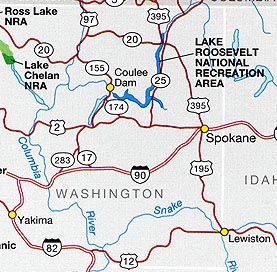
In Center for Environmental Law, the 9th Circuit Court of Appeals considered a NEPA challenge by environmental groups to a proposed incremental drawdown of water from Lake Roosevelt in eastern Washington.

Lake Roosevelt National Recreation Area

Lake Roosevelt in eastern Washington state serves a variety of purposes, including irrigation, navigation, flood control, power generation, recreation, and fish management.

According to the Court, Plaintiffs' most significant challenge on appeal was Reclamation's cumulative effects analysis in the environmental assessment (EA). The Court characterized this claim as form over substance, as follows:
The record includes extensive evidence that [Reclamation] considered the relevant prior . . . actions and took the requisite hard look before approving the drawdown project. Although this evidence is not presented in the cumulative effects section of the EA, it would impermissibly elevate form over substance to hold that Reclamation must replicate its entire analysis under the heading of cumulative effects.
While the Court agreed with Plaintiffs' argument that "the portion of the EA exclusively devoted to cumulative effects is conclusory and unenlightening," Reclamation's analysis was sufficient when "reading the EA as a whole."

In addition to upholding Reclamation's cumulative effects analysis, the Court also upheld its indirect effects and alternatives analysis. In short, the Court opined as follows:
  • Indirect Effects. "Agencies need not account for potential growth effects that might be caused by a project if the project is exclusively intended to serve a much more limited need." In this case, "the causal tie between the project and growth is significantly . . . attenuated" with regard to Plaintiffs' claim that the project would cause additional future draw downs. The Court found it significant that "[t]he use of the expanded capacity remains both firmly in the control of Reclamation and is subject to review in a future EA or EIS." Consequently, any environmental effects from additional diversions were not, in the Court's opinion, indirect effects of the current drawdown project.
  • Alternatives Analysis. Reclamation’s EA discusses two alternatives—the proposed drawdown and a no action alternative. Plaintiffs' challenged the selection of alternatives as "overly constrained." The Court opined that it has "previously recognized, there is no "numerical floor on alternatives to be considered." In addition, the Court noted prior case law where it previously held that “the absence of a more thorough discussion in [an] EIS of alternatives that were discussed in and rejected as a result of prior state studies does not violate NEPA." Consequently, the Court held that Reclamation's alternatives analysis complied with NEPA. In reaching this conclusion, the Court cited Native Ecosys. Council v. Dombeck, 304 F.3d 886, 897 (9th Cir. 2002), which held that an EA that discussed only the agency’s preferred alternative and a no-action alternative satisfied NEPA. Finally, the Court noted that Reclamation was not required to "consider the alternatives [Plaintiffs] prefer[ed]."
Although Reclamation's NEPA compliance was upheld, it is important to heed the Court's cautionary note, "[we do not] suggest that agency discussion of impacts can be so diffuse, scattered, or opaque that a court must play Humpty Dumpty to put the pieces together in a coherent fashion."

For more on NEPA and environmental assessment issues see, Environmental Law.

Monday, August 15, 2011

Honolulu Rail Transit Project Challenged in Federal Court -- Answer and Reply

Case Name: Honolulutraffic.com et al. v. Federal Transit Administration et al.

Case Number: 1:2011cv00307

Court: Hawaii District Court

Presiding Judge: A. Wallace Tashima

Rail Route Map from www.honolulutransit.org

Plaintiffs: The Plaintiffs are Honolulutraffic.com; Cliff Slater; Benjamin J. Cayetano; Walter Heen; Hawaii’s Thousand Friends; The Small Business Hawaii Entrepreneurial Education Foundation; Randall W. Roth; and Dr. Michael Uechi.

Defendants: The named Defendants are the Federal Transit Administration (“FTA”); Leslie Rogers, in his official capacity as FTA Regional Administrator; Peter M. Rogoff, in his official capacity as FTA Administrator; US Department of Transportation; Ray LaHood, in his official capacity as Secretary of Transportation; The City and County of Honolulu; Wayne Yoshioka, in his official capacity as Director of the City and County of Honolulu Department of Transportation (this is an error by Plaintiffs—it should be Department of Transportation Services).

Complaint: Nicholas C. Yost, the California attorney representing the Plaintiffs, filed the complaint on May 12 , 2011, in Hawaii's federal district court challenging the Honolulu Rail Transit Project. Plaintiffs list the following counts in their complaint:

  • Count 1: Defining the Purpose and Need so Narrowly as to Preclude Consideration of All Reasonable Alternatives (NEPA)
  • Count 2: Failure to Consider all Reasonable Alternatives (NEPA)
  • Count 3: Failure Properly to Analyze the Environmental Consequences of Alternatives (NEPA)
  • Count 4: Improper Segmentation (NEPA)
  • Count 5: Failure to Identify and Evaluate Use of Native Hawaiian Burials and Traditional Cultural Properties (Section 4(f))
  • Count 6: Arbitrary and Capricious Evaluation of the Project’s Use of Section 4(f) Resources (Section 4(f))
  • Count 7: Improper Project Approval (Section 4(f))
  • Count 8: Failure to Account for Effects on Historic Properties (NHPA)
Plaintiffs are asking the court to issue an injunction to stop the project and attorneys’ fees.

Answer: The FTA filed its answer to the complaint on August 12, 2011. The complaint is the usual kind of “kitchen sink” approach used in environmental impact statement challenges to transportation projects. Consequently, the FTA’s answer is a standard format generally used in these cases—admissions, denials, affirmative defenses.
 
Next Steps: The other Defendants should be filling a reply at some point soon. All parties should be aware that these kinds of cases seldom go to trial. Whether the facts, as determined by the court, support Plaintiffs’ allegations will be more thoroughly briefed by the parties in summary judgment briefs. That’s when the case becomes interesting.

Update 08/16/2011: Civil Beat reports that City defendants filed their answer in September.
 
Visit Honolulu Rail Transit Project for more on this project.

Wednesday, January 19, 2011

9th Circuit Loosens up its 3rd Party Intervention Standard in NEPA Litigation

The "federal defendant" rule was developed through case law in the U.S. Court of Appeals for the 9th Circuit.  The rule categorically precludes private parties and state and local governments from intervening of right as defendants on the merits of NEPA actions.  The rationale for this rule is that such parties lack a "significantly protectable" interest warranting intervention of right under Rule 24(a)(2), because NEPA is a procedural statute that binds only the federal government.

However, the 9th Circuit recently abandoned the "federal defendant" rule in Wilderness Society v. U.S. Forest Service, No. 09-35200, slip op. (9th Cir. Jan. 14, 2011).  Wilderness Society arises out of the U.S. Forest Service's adoption of a travel plan that designated 1,196 miles of roads and trails for use by motorized vehicles in the Minidoka Ranger District of Idaho's Sawtooth National Forest.  The central issue for the 9th Circuit was whether the lower court should have applied the "federal defendant" rule to deny intervention to three groups representing recreation interests.

Diamondfield Jack Campground
Minidoka Ranger District
The 9th Circuit abandoned the "federal defendant" rule, reversed the lower court for applying it, and opined as follows:
When considering motions to intervene of right under Rule 24(a)(2), courts need no longer apply a categorical prohibition on intervention on the merits, or liability phase, of NEPA actions. To determine whether putative intervenors demonstrate the "significantly protectable" interest necessary for intervention of right in a NEPA case, the operative inquiry should be whether the "interest is protectable under some law" and whether "there is a relationship between the legally protected interest and the claims at issue."  A putative intervenor will generally demonstrate a sufficient interest for intervention of right in a NEPA action, as in all cases, if "it will suffer a practical impairment of its interests as a result of the pending litigation." 
(Citations omitted.)  Among other things, the court based its decision on the facts that the "federal defendant" rule was (1) at odds with the normal standards it applies in all other intervention of right cases in cases asserting violations of environmental statutes and (2) out of step with all but one of its sister circuits.

This opinion opens up the door for potential third party defendants in NEPA cases who would have previously been denied intervention under the "federal defendant" rule.

Visit the Environmental Law archives for more on this topic.

Saturday, December 18, 2010

Interisland Renewable Energy Program: Wind Programmatic EIS

US Department of Energy announces its intention to prepare a programmatic environmental impact statement (EIS) with the State of Hawaii as joint lead agencies pursuant to the National Environmental Policy Act (NEPA) of 1969 and the Hawaii Environmental Policy Act.

The Hawaii Interisland Renewable Energy Program: Wind Programmatic Environmental Impact Statement will assess the foreseeable environmental impacts which may arise from wind energy development under the Hawaii Interisland Renewable Energy Program (HIREP). Hawaii proposes to facilitate the development of wind-generated electric energy and the required improvements to the existing electric transmission infrastructure in Hawaii. This EIS is the first phase of a programmatic environmental review of developing and increasing renewable energy technologies in Hawaii.

For more on this project and designated comment periods, visit Notice of Intent To Prepare a Programmatic Environmental Impact Statement for the Hawai‘i Interisland Renewable Energy Program: Wind (DOE/EIS-0459).

Tuesday, November 9, 2010

University of Hawaii's Final Report on Hawaii's Environmental Review System

Pursuant to Act 1, Session Laws of Hawaii 2008, University of Hawaii researchers prepared a report for the Hawaii State Legislature on Hawaii’s environmental review system. A copy of the document is available at http://goo.gl/yURmK.

The study focuses on five areas of concern within the system: (1) applicability, (2) governance, (3) participation, (4) content and, (5) process, and describes identified issues and specific recommendations for addressing them. The 390 page document proposes drastic changes to Hawaii's environmental review laws, particularly HRS chapter 343, Hawaii's environmental impact statement law.

For previous blog entries on this study, see:
It is anticipated that recommendations from this study will be included in proposed bills submitted to the legislature for its consideration.  The opening day of Hawaii's Legislature is held on the third Wednesday in January; i.e., January 19, 2011.

For more on environmental laws, see Environmental Law.

Wednesday, July 28, 2010

State to Exempt "Alien or Pest Species Control" from Environmental Review

The Hawaii Department of Land and Natural Resources ("DLNR") is proposing an "alien or pest species control" exemption to the Hawaii Environmental Policy Act ("HEPA"). If adopted by the environmental council, it may allow the state to move forward with some controversial programs without the benefit of environmental review or public disclosure.

DLNR's Proposed Amended Exemption List, dated May 26, 2010, is posted at the Office of Environmental Quality Control's ("OEQC") Web site. On page 5 of DLNR's proposed list, under the heading, Exemption Class #1: Operations, repairs or maintenance of existing structures, facilities, equipment or topographical features, involving negligible or no expansion or change of use beyond that previously existing, is the following proposed exemption:
29. Actions that are intended to maintain or improve the sustainability of those natural resources under the jurisdiction of the Department, including law enforcement, regulation compliance, resource and environmental monitoring, alien or pest species control, and other administrative and management measures.
The "alien or pest species control" exemption comes at an interesting time considering the following: Hawaii Department of Land and Natural Resources Proposes the Release of Alien Insect from Brazil into Hawaii's Environment to Control Strawberry Guava. However, the proposed exemption list is not a free pass for DLNR.

First, DLNR's exemption list must be adopted by the environmental council. The environmental council has HEPA rulemaking authority under HRS § 343-6. This includes the authority to "establish procedures whereby specific types of actions, because they will probably have minimal or no significant effects on the environment, are declared exempt from the preparation of an environmental assessment[.]" Pursuant to HEPA's administrative rules, HAR § 11-200-8, these lists and any amendments to the lists must be submitted to the environmental council for review and concurrence. The environmental council is subject to Hawaii's sunshine law; therefore, the public will have an opportunity to comment before the environmental council takes action at one of its public meetings.

Second, even if the new exemption list is adopted, this would not give DLNR carte blanche to exempt all of its alien or pest species control programs. As the Hawaii Supreme Court said in the famed Superferry Case (Sierra Club v. Dep't of Transp., 167 P.3d 292 (Haw. 2007)), "blind deference to agency exemption determinations is not appropriate." As the Court explained, an agency making an exemption determination must comply with the procedural consultation requirements of HEPA and make four determinations: (1) defining the action, (2) whether it fits into an exempt class, (3) whether an exclusion to the exemption applies, and (4) whether the exemption is consistent with the letter and intent of HEPA because it will “probably have minimal or no significant effects on the environment."

One of the lessons of the Superferry Case is that even though an agency (in that case, the state Department of Transportation) relies on an exemption list adopted by the environmental council, the agency must be sure that a particular project fits the exemption. In the Superferry Case, the Court concluded,
Contrary to the expressly stated purpose and intent of HEPA, the public was prevented from participating in an environmental review process for the Superferry project by DOT's grant of an exemption to the requirements of HRS chapter 343. The exemption was erroneously granted as DOT considered only the physical improvements to Kahului harbor in isolation and did not consider the secondary impacts on the environment that may result from the use of the Hawaii Superferry in conjunction with the harbor improvements. “All parties involved and society as a whole” would have benefitted had the public been allowed to participate in the review process of the Superferry project, as was envisioned by the legislature when it enacted the Hawai‘i Environmental Policy Act.
Although DLNR's proposed rules have been posted on OEQC's Web site, it is unclear where the environmental council is in its review process. According to the OEQC's guidance, Guidelines for Preparing Exemptions, the proposed list must be noticed in the Environmental Notice which triggers a 30-day public comment period.

UPDATE 8/02/10: Notice for the Proposed Exemption Lists for Aquatic Resources, State Parks, Forestry and Wildlife, Boating and Ocean Recreation, and Department-Wide were posted in the July 8, 2010 edition of the Environmental Notice. According to the notice, comments are due "within 30 days of the date of this Notice to the Department of Land and Natural Resources, Engineering Division, Project Planning and Management Branch, ph: 587-0229, fax: 587-0283, email: carty.s.chang@hawaii.gov, and the Office of Environmental Quality Control, 235 South Beretania Street, Honolulu, HI 96813, fax: 586-4185."